
Face scan runs on your device
PSL Scale Test: Get Your AI PSL Score, Tier and Rank
Upload one front-facing photo and My PSL Scale scans 478 facial landmarks right on your device. Then our looksmax AI reads the photo and places it on the PSL scale: a PSL score out of 8, your tier, your Top X% rank among photos scored on this site and a one-line verdict.
Scanned in your browser. Your photo is not uploaded for the scan.
After the scan: your AI PSL score with a $3 report, or with 10 free credits when you sign in.
What the scan shows
AI-generated sample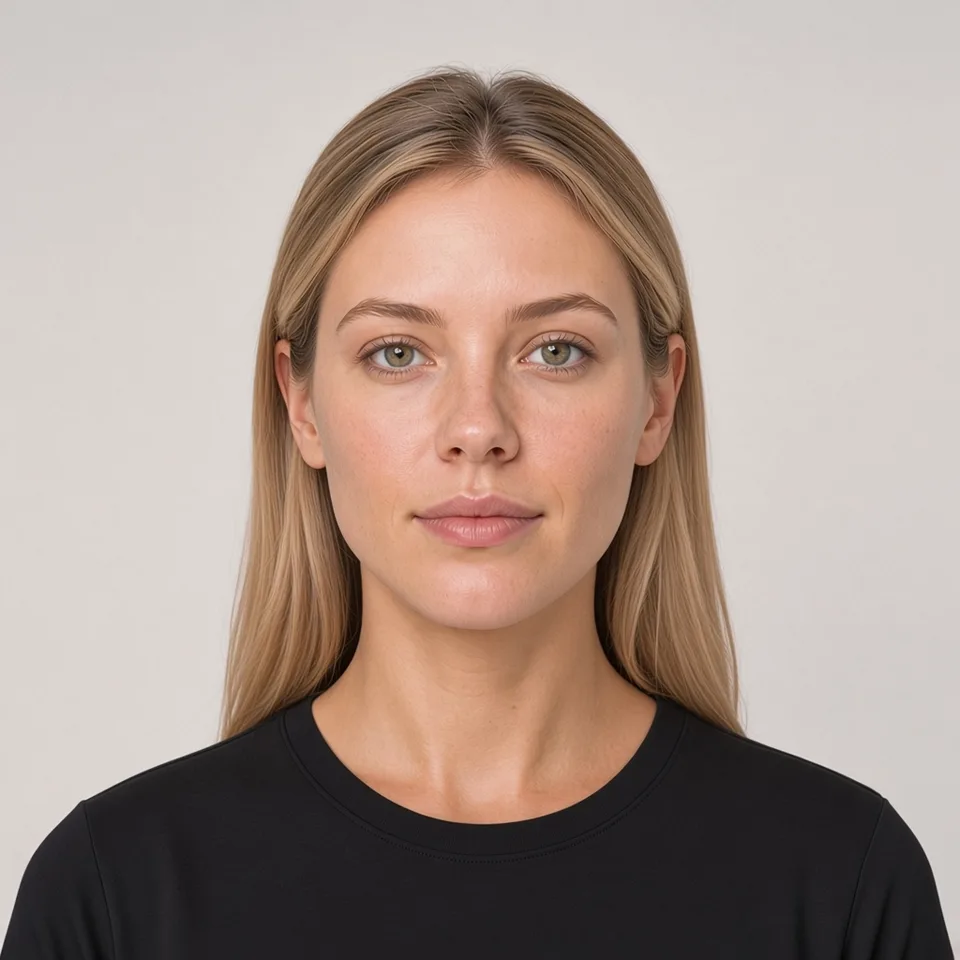 478 landmarks1.18:1 Eye spacing
The scan step is free and needs no account. You see the face mesh, guide lines, your eye-spacing ratio and four geometry tabs in seconds. For the AI PSL rating, pick a $3 report with no sign-up, or sign in and use 10 free credits.
PSL Rating Test: Scan, Score and Rank Your Face
The PSL scale rates facial attractiveness from 0 to 8. It grew out of looksmaxxing forums, where a strict scale with named tiers replaced the inflated 1 to 10 rating. On the PSL scale, an ordinary face sits near 4 and a 6 is already rare, so every point means something.
My PSL Scale turns that scale into a PSL scale test you can take in a minute:
01
Upload one photo.
A clear, front-facing photo with only you in it. JPG, PNG or WebP, up to 10 MB.
02
Run the PSL scan.
Your browser places 478 landmarks and draws the face mesh, guide lines, your eye-spacing ratio and four geometry tabs. This PSL check is free, needs no account and doesn't upload the photo.
03
Get your PSL score.
The AI gives you a PSL score out of 8, your tier, your Top X% rank among photos scored on this site and a one-line verdict.
Some people call this a PSL rater or a PSL calculator, others a looksmaxing test. Either way, it is a PSL checker that shows its work: the geometry is on screen before any number appears, so you can see what your PSL rank is built on.
Your AI PSL Rating: a $3 Report or 10 Free Credits
After the scan, you choose how to see your result on the PSL scale.
Full report
$3
The $3 report needs no account. It is one payment, not a subscription, for the full PSL face rating of one photo: your score, tier, Top X% rank, verdict and all eight dimensions explained.
Sign in
10free credits
Or sign in and get 10 free credits. One AI score costs 10 credits, so the welcome credits reveal your cover result: the PSL score, tier, Top X% and verdict. Buy any credit pack to unlock the eight explanations, without running the analysis again.
If a report fails, no credits are taken.
My PSL Scale also has a separate page that shows the local score from the scan for free, with no AI involved.
The PSL Rating Scale: Seven Tiers from 0 to 8
Every PSL score maps straight to one of seven PSL ranks on the PSL rating scale. Each tier has a name for men and a name for women. When a score isn't tied to gender, both names are shown. Ranges include the lower number: 6.5 counts as CHAD / STACY, while 6.4 is CHADLITE / STACYLITE.
| Tier (men / women) | PSL score | What it usually means |
|---|---|---|
| TRUE ADAM / TRUE EVE | 7.75 to 8 | The top of the PSL scale: near-ideal harmony with no weak feature. Extremely rare in real photos. |
| CHAD / STACY | 6.5 to 7.75 | Very high. Strong structure and balanced proportions that hold up in almost any photo. |
| CHADLITE / STACYLITE | 6 to 6.5 | High. Clearly attractive, with one or two features keeping the face from the next tier. |
| HTN / HTB | 5 to 6 | Above the middle. Good-looking at a glance, usually thanks to balance plus one clear strength. |
| MTN / MTB | 3.5 to 5 | The ordinary middle, where most photos land. |
| LTN / LTB | 2 to 3.5 | Below the middle. One or more features look off balance, and photo conditions often make it worse. |
| VERY LOW RANGE | 0 to 2 | The bottom of the PSL scale. Rare, and often a sign that the photo itself is the problem. |
A quick guide to the PSL looksmax slang: HTN, MTN and LTN stand for high-tier, mid-tier and low-tier normie, and HTB, MTB and LTB are the matching terms for women. True Adam and True Eve are the community's names for the ideal end of the looksmaxing scale. Some versions add harsher labels below LTN. We stop at "very low range", because a label that insults the person adds nothing to a rating of a photo. Together, the seven tiers are the looksmax ranking people mean when they talk about the PSL scale.
Reading Your Result on the Looksmaxing Scale
Your PSL rank is easier to read once you know where the middle of the looksmax scale sits. Most results land between 3.5 and 5, in the MTN / MTB band.
4/8
The ordinary middle. A 4 sits in MTN / MTB, the center of the PSL scale. Nothing pulls the face down hard, and nothing lifts it into standout territory. Light, camera angle and grooming can move a photo half a point either way.
5/8
Good-looking at a glance. A 5 is the start of HTN / HTB, usually thanks to balanced proportions plus one clear strength, such as a defined jawline or well-set eyes.
6/8
High on the PSL scale. A 6 means chadlite or stacylite: strong structure and good harmony. The gap to CHAD / STACY is usually one weaker feature or a less flattering photo.
The 8 Dimensions Behind a PSL Face Rating
A full PSL face rating looks at eight dimensions. The first four come mostly from facial geometry. The last four depend on how the face reads in the photo itself. In the full report, each one gets its own score and a short explanation.
Symmetry
How closely the left and right sides mirror each other around the midline of the face.
Harmony
Whether the features work together. A face can have strong parts and still lack harmony.
Proportions
The balance of lengths and widths: face height to width, eye span, mouth width and the vertical thirds.
Facial structure
The frame of the face: cheekbone span, jaw width, chin position and lower-face length.
Skin presentation
How clear and even the skin looks in this photo, which also depends on light and sharpness.
Feature familiarity
How typical and well balanced the features are. Familiar, average-like faces tend to rate well.
Contour emphasis
How strongly the face shows the contours people read as masculine or feminine, such as jaw definition.
Distinctive features
What makes the face memorable rather than generic.
How the Looksmax AI Works Out Your PSL Score
A PSL score on My PSL Scale comes from two layers. The first is the local scan in your browser. A face landmark model places 478 points on your face, and ratios are measured from them: eye spacing, symmetry offsets, facial proportions and jaw-to-cheek width. A scoring algorithm also combines these measurements with the photo's brightness, contrast and sharpness into a local score. The second layer is our PSL rating AI. It reads the photo itself, judges what geometry can't see, such as skin, contour and the overall impression, and returns your PSL scale rating: a score out of 8, the matching tier, your Top X% rank and a one-line verdict.
Your tier comes straight from the score, using the PSL rating scale above. Your Top X% compares this photo with other photos scored on this site. It describes the photo, not you as a person.
What the four geometry tabs show
Overview
Eye spacing: the gap between your inner eye corners divided by your average eye width, shown as a ratio such as 1.10:1. It is a geometry reference and is kept separate from any AI rating.
Symmetry
This face symmetry test marks ten pairs of matching points and a reference midline, then shows how much higher or lower three pairs sit than each other (outer eye corners, mouth corners and jaw points) as a share of face height. Head tilt and expression change these numbers more than most people expect.
Proportions
Cheek span divided by the distance from an upper-face anchor to the chin. The anchor is a mesh point near the top of the forehead, not your hairline. Compare this ratio between your own photos rather than against golden ratio face charts, which measure from different points.
Structure
Jaw span divided by cheek span, with the visible lower-face contour highlighted. A front photo can't measure bone depth, chin projection or your side profile.
Get a Reliable PSL Scale Reading: Photo Limits

Front, eye level, soft even light, neutral face
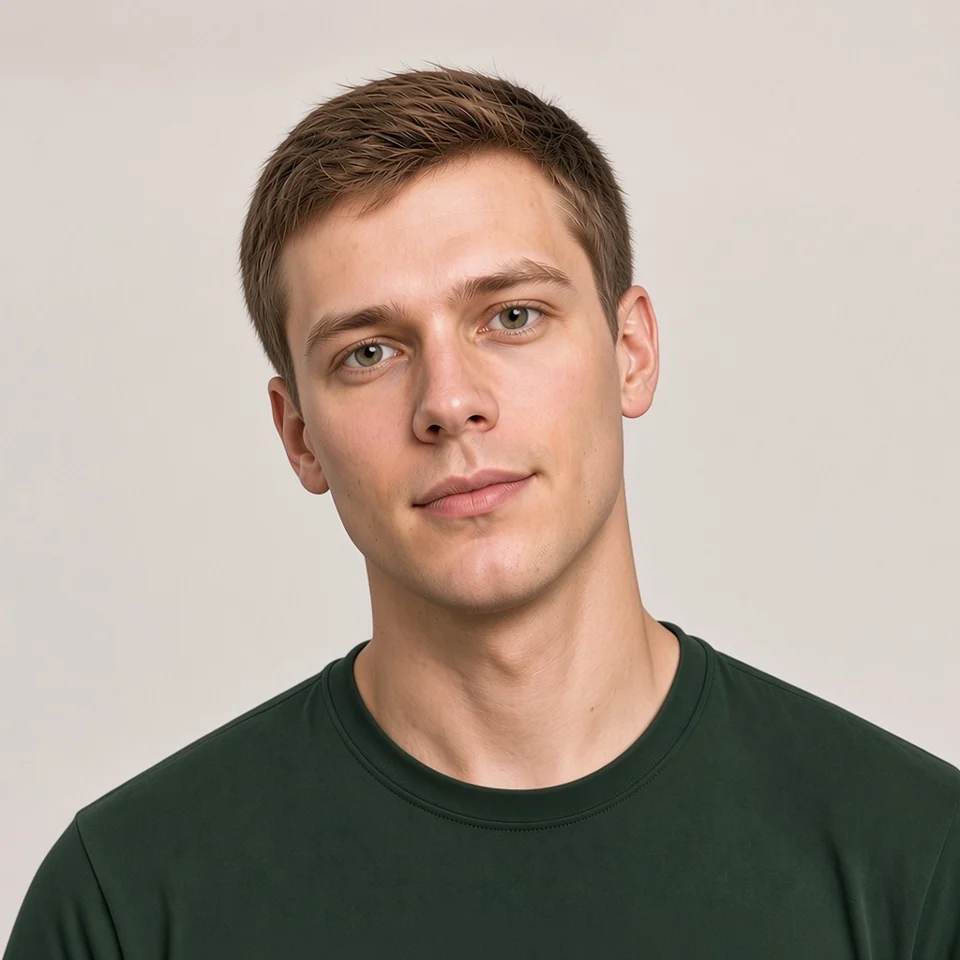
Tilted head
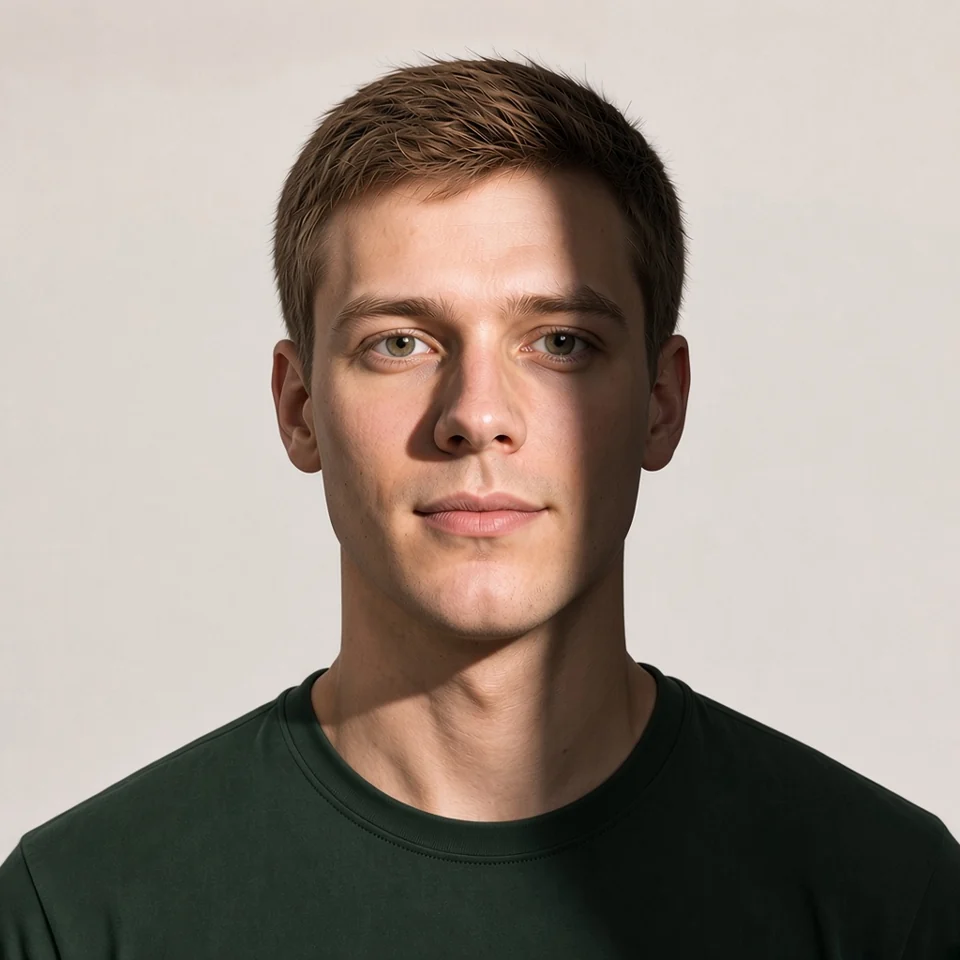
Harsh side light
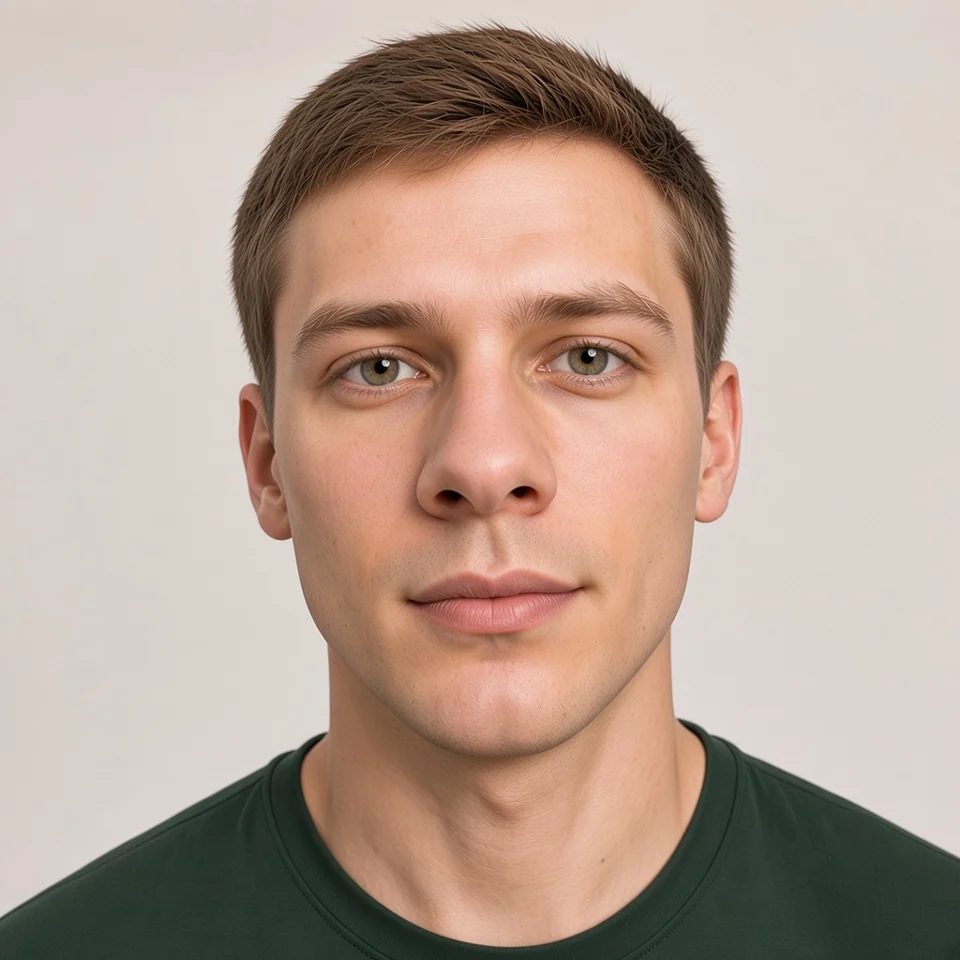
Close-up selfie
Any looksmax rating from a photo, whether it is a quick PSL test or a full report, is really a rating of that photo. These are the things that change results the most:
- Angle. Turning or tilting your head by a few degrees shifts the symmetry numbers and makes one cheek look wider. Face the camera straight on, at eye level.
- Lens distance. A phone held close to your face makes the nose and mid-face look larger. Hold it at arm's length, or use the rear camera.
- Light. Harsh side light or a dark room hides contours and flattens the skin. Soft, even light from the front works best.
- Expression. Smiling, raising your eyebrows or clenching your jaw moves the landmarks. A relaxed, neutral face gives numbers you can compare.
- Obstructions and filters. Hair over the face, glasses, beauty modes and heavy filters all distort what is measured.
The local check has no separate rule for turned faces, so a three-quarter photo still gets numbers. They simply mean less. If a ratio looks wrong, retake the photo instead of trusting it. For PSL scale results you can compare, shoot every photo with the same setup.
Your Photo: Scanned on Your Device, Sent to AI Only When You Ask
Photo handling works in two layers.
The scan stays on your device. The landmark model is downloaded from our own site, your photo is read in your browser, and no image is sent to a server during the scan. A compressed copy of the photo, the geometry and the scan result are kept in your browser's storage for up to 30 minutes, and they are cleared as soon as you choose another photo.
The AI report needs your photo. Only when you ask for an AI report, by paying for the $3 report or spending credits, is the photo sent to our AI service, together with the scan geometry. By default the photo isn't saved in our database or file storage. We keep the report result.
PSL Scale FAQ
Upload a clear, front-facing photo at the top of this page and press Check photo & continue. The PSL scanner maps your face in your browser in a few seconds. Then choose the $3 report, or sign in and use 10 free credits, and the AI returns your PSL score, tier, PSL rank and verdict.
The scan is free: no account, no upload, and you get the face mesh, eye spacing and four geometry tabs. An AI PSL score costs 10 credits, and new accounts get 10 free credits, so your first score is covered. Without an account, the $3 report gives you the full result in one payment. To read all eight dimensions after a credit score, buy any credit pack.
Most real photos land between 3.5 and 5, in the MTN / MTB band. From 5 up is above the middle of the PSL scale, and 6 or higher (chadlite or stacylite and up) is genuinely rare. That strictness is why a PSL score reads lower than a 1 to 10 rating.
Yes. The looksmaxxing scale people quote in forums is the PSL scale, whether they spell it with one x or two: 0 to 8, with the same seven tiers. A PSL looksmaxxing score posted in a thread and a score from this site sit on the same PSL scale, but each one only describes the photo it came from.
A 1 to 10 score is usually inflated, so a 7 can mean almost anything. The PSL scale runs from 0 to 8, puts ordinary faces near the middle and keeps the top tiers for rare cases. There is no exact conversion between the two.
As accurate as the photo allows. The PSL scan measures the same points the same way every time, so the geometry is repeatable. The AI, like any looksmaxxing AI, rates one photo, so light, angle and expression matter. For a fair comparison, take the PSL scale test with two photos shot the same way.
Yes. The scan and the PSL scale are the same for everyone. Each tier has a name for men and a name for women, such as HTN and HTB, and both names are shown when a result isn't tied to gender.
Partly. The Structure tab compares jaw span with cheek span from the front, but it can't see your jaw angle, chin projection or side profile.
The check needs exactly one face. Someone in the background, a poster or a mirror reflection can all count as a second face. Use a photo with only you in it.
Usually no face was found, or the landmarks weren't reliable because the face is too small, cut off or out of frame. Sometimes the face model or the photo couldn't load. Try a clear, front-facing photo in even light. Some browsers can't open HEIC photos, so save the image as a JPG first.
No. A PSL score, like any looksmaxxing rating, describes how one photo of a face reads on one scale. It says nothing about your health, your personality or your value as a person.
Take the PSL scale test
- Free scan, no account
- Scan runs in your browser
- No upload during the scan